

Every Christian country celebrates Christmas a little differently. Some people celebrate on 25th December, some earlier. Some exchange gifts on Christmas Eve, some wait until the end of the month. Some have turkey and ham as their main meal, others prefer seafood. Traditions can vary between continents, countries, and households. Here are some Belgian Christmas Traditions to look forward to if you’re spending this winter in Oudenaarde.
Advent
As Christmas is originally a Christian Holiday, many people celebrate advent in the run-up to Christmas. Advent last for four weeks and is symbolized in homes and churches with the display of advent wreaths and candles. Every Sunday, one of the four candles is lit, marking the beginning of the darkest, but coziest weeks of the year. This continues for four weeks, until all four candles are burning. When all the candles are lit, the countdown is over and Christmas Day has arrived.
Another way to celebrate Advent is by having an advent calendar. The calendars have with 25 doors, symbolising the countdown to Christmas beginning on the 1st of December. Behind each door, children often find sweet treats or chocolates. In recent years, adults have also embraced these calendars, with versions containing small bottles of alcohol, beauty products or other gifts.
Sinterklaas
Did you know that Saint Nicholas and Santa Claus are two separate people in Belgium, and both have their own holiday? Sinterklaas, or Saint Nicholas in English, is celebrated on the 6th of December, a tradition that dates back to the third century. On the evening of December 5th, children place their shoes by the door or fireplace before they go to sleep, along with a gift or snack for Saint Nicholas. In return, they wake up to presents or candy. Sometimes children will also leave gifts, or beer for the pieten, the helpers of Saint Nicholas. Traditional treats include gingerbread, tangerines, or even homemade drawings. In some families, it is also customary to bake Brussels waffles the night before.
During the colonisation of New Holland (modern-day New York City), Dutch settlers brought the legend of Saint Nicholas to America. The name Santa Claus actually comes from the English pronunciation of Sinterklaas. Over time, the modern image of Santa Claus was shaped by various influences. A famous poem from 1823, A Visit from St. Nicholas (often known as ’Twas the Night Before Christmas), portrayed him as a jolly, plump gift-giver. Later, in 1931, illustrator Haddon Sundblom created the iconic red-suited Santa Claus for Coca-Cola, cementing the cheerful image we know today.
Christmas Markets
Christmas markets are very popular in Belgium and a great chance for local traders to showcase their goods. You’ll find a large Christmas market in most main cities and smaller ones in more rural spots, ranging from stalls set up in cafes to community halls. Traditionally Christmas markets have festive wooden booths where local and independent businesses sell crafts, gifts, food and drinks that you wouldn’t find on the high street. Check your local city information page for Christmas market news this year.
Classic beverages for Christmas markets include glühwein, hot chocolate or jenever shots. Waffles, fries and soup include the typical food that you can find on the Christmas markets.
The Three Wise Man
To end the Christmas celebrations, we commemorate the three wise man who followed a bright star to Jezus when he was born. This is something we celebrate each year on the 6th of December. At different bakeries, you might find something called a ‘three wise man pie’ or ‘galette des rois’ which is a pie decorated with a gold paper crown. A fève (a small trinket or ‘bean’) is hidden inside and whoever finds it is the King or Queen for the day and wears the crown. The fève might be a small plastic figure or religious symbol but some prefer to use porcelain or even gold!
Merry Christmas
Belgium has more than one national language. In Flanders they speak a Belgian version of Dutch called Flemish; the Southern Walloon Region has mostly French speakers, and the eastern part of Belgium has a small portion of German speakers. Where you grew up determines the language you learn in school and the language you speak most every day. Naturally, there are also many ways to say Merry Christmas too. A Flemish person might say “Vrolijk Kerstfeest.” A French-speaking person would wish you a “Joyeux Noel” and a German speaker would say “Frohe Weihnachten”.
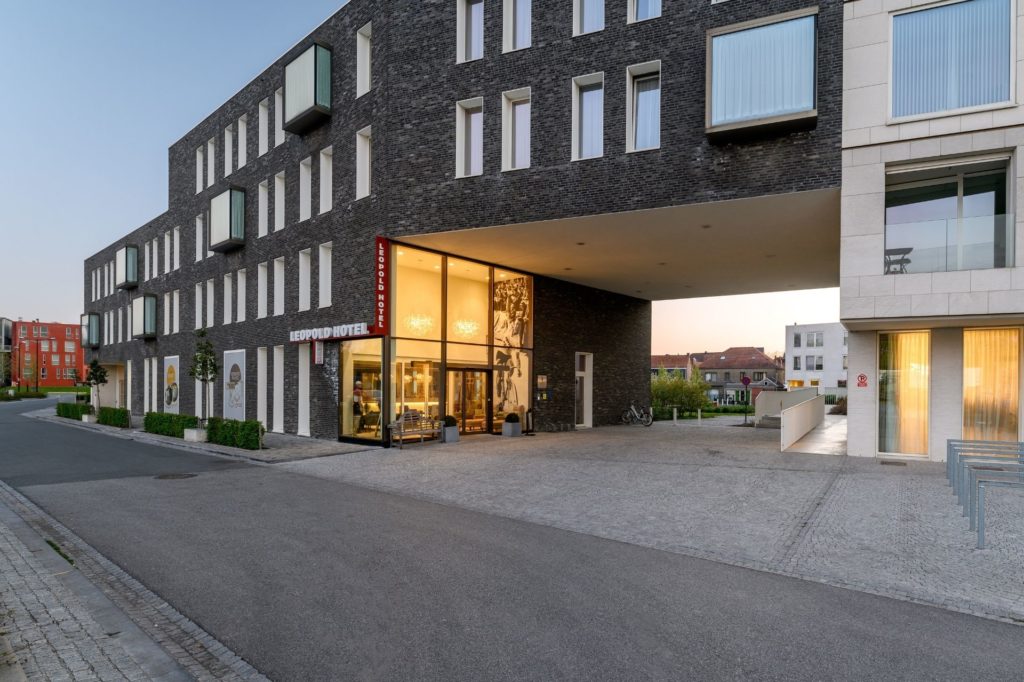
If you’d love to visit Oudenaarde this Winter and enjoy our Christmas traditions yourself, book your stay in Leopold Hotel Oudenaarde. We offer spacious, comfortable lodgings, excellent value for money and a warm Flemish welcome. Our best available rates are exclusively available on our website so be sure to book direct



 English
  Dutch
Dutch  French
  German